
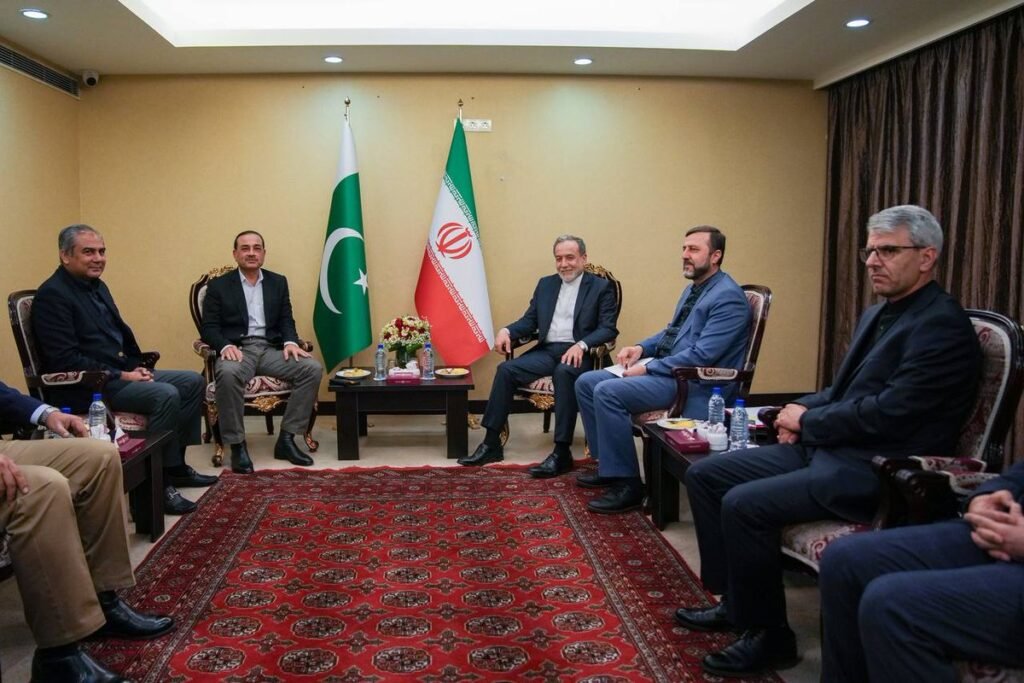
In the fast-evolving landscape of April 2026, Pakistan has emerged as an unlikely yet pivotal diplomatic bridge between the United States and Iran. As the fragile ceasefire brokered through intense Pakistani facilitation—faces an April 22 deadline, Islamabad finds itself at the center of high-stakes negotiations aimed at preventing a wider regional conflict. With delegations preparing for potential renewed talks in the Pakistani capital and Army Chief Field Marshal Asim Munir conducting shuttle diplomacy, this moment underscores a profound shift in global power dynamics.
Pakistan’s mediation is not a fleeting episode but a strategic assertion of middle-power agency in an era where traditional superpowers struggle to resolve deadlocks alone. By hosting the landmark Islamabad Talks on April 11-12, 2026, and advancing proposals for de-escalation, Islamabad is actively helping reshape US-Iran relations amid the broader transition to a multipolar world order.
The Genesis of Pakistan’s Mediation Role
The current US-Iran tensions stem from an eight-week conflict that disrupted global energy flows, particularly through the Strait of Hormuz. Pakistan stepped in decisively, leveraging its unique position to broker an initial ceasefire on April 8 and facilitate direct (and indirect) talks in Islamabad.
Key milestones include:
- Intensive backchannel efforts: Pakistani leaders, including Prime Minister Shehbaz Sharif and Foreign Minister Ishaq Dar, engaged in marathon diplomacy with regional partners like Saudi Arabia, Qatar, Turkey, and Egypt.
- Army Chief’s pivotal visits: Field Marshal Asim Munir’s recent three-day trip to Tehran involved meetings with Iranian leadership to convey US proposals and narrow differences. Reports indicate progress on extending the ceasefire and addressing core issues like Iran’s nuclear program.
- High-level US engagement: President Trump reportedly praised Munir’s efforts, while Vice President JD Vance led the American side in earlier rounds alongside envoys like Jared Kushner and Steve Witkoff.
Iranian officials have publicly expressed trust in Pakistan, with one ambassador stating Tehran would “do talks in Pakistan and nowhere else.” This credibility stems from deep historical, cultural, and security ties, including a shared 900+ km border and cooperation on counter-terrorism.
Highlight: “Pakistan has unusual credibility as a mediator, maintaining workable ties with both Washington and Tehran, while a history of strained relations with each gives it just enough distance to be seen as a credible go-between.” — Adam Weinstein, Quincy Institute.
Why Pakistan? Geography, History, and Strategic Self-Interest
Pakistan’s role as mediator is rooted in several interlocking factors:
- Geostrategic Location: Situated at the crossroads of South Asia, the Middle East, and Central Asia, Pakistan shares direct borders with Iran and maintains functional relations with the US and Gulf states. This allows it to act as a natural conduit.
- Balanced Relationships: Unlike many actors, Islamabad balances ties with Iran (cultural and Shia population links), the US (historical security cooperation), China (via CPEC), and Saudi Arabia (recent defense pact). This “strategic equidistance” builds trust.
- Economic and Security Stakes: The Hormuz crisis severely impacted Pakistan’s oil and LPG imports (with ~80% of crude transiting the strait). Mediation protects national interests while offering leverage for safer shipping lanes and potential joint patrols.
Think tanks like the Stimson Center and Institute of Strategic Studies Islamabad describe this as “regionally anchored” diplomacy—pragmatic, interest-driven, and distinct from purely neutral models like Norway’s.
Key Quote: “Pakistan is not seeking to replicate Norway’s model of quiet, distant neutrality… It is shaping a more engaged, regionally anchored form of mediation that reflects its own geography and strategic realities.” Amina Khan, Institute of Strategic Studies Islamabad.
Implications for the New World Order: The Rise of Middle Powers
This episode signals a broader change of hands in global diplomacy. In a post-unipolar world, middle powers like Pakistan, Turkey, and Egypt are no longer peripheral players but active architects of stability.
– Diffusion of Power: As US influence faces constraints and great-power rivalry intensifies, middle powers fill mediation gaps through coalition-building and pragmatic deal-making.
- Transaction over Ideology: The current US administration’s preference for results-oriented diplomacy has created openings for intermediaries who deliver without demanding full alignment.
- Connectivity as Leverage: Pakistan’s efforts intertwine with ambitions like CPEC 2.0 and Gwadar as a multipolar hub, turning geographic vulnerabilities into diplomatic assets.
Global analyses from Brookings, CSIS, and Pakistani institutes highlight that successful mediation could elevate Pakistan’s status as a “swing player” in the emerging polycentric order, while underscoring risks if internal constraints (economic or political) limit follow-through.
Highlight: Pakistan’s diplomacy reflects the “profound restructuring of the global power landscape,” echoing its 1971 role in facilitating US-China rapprochement. Today, it stands at another crossroads of multipolarity.
Opportunities and Risks for Pakistan
Opportunities:
- Enhanced diplomatic prestige and soft power projection.
- Economic benefits: Safer energy routes, Gulf investments, and strengthened CPEC security.
- Platform for deeper engagement: Inviting universities for panels on conflict resolution and nominating diplomats for awards recognizing multi-alignment excellence.
Risks:
- Balancing act amid US intelligence concerns over Iran ties and relations with India/Saudi Arabia.
- Domestic pressures if talks falter or yield limited gains.
- Exposure to spillover from Hormuz instability or renewed hostilities.
Experts note that Pakistan must institutionalize gains to avoid over-reliance on individual figures like the Army Chief.
Think Tank Policy Recommendations
To capitalize on this moment and contribute to a stable new world order, the World Think Tanks Council proposes the following actionable steps:
- Institutionalize Dialogue: Establish a standing “Islamabad Dialogue” forum co-hosted with US, Iranian, and regional think tanks, focusing on Hormuz security, nuclear confidence-building, and economic corridors.
- University-Led Panels: Partner with institutions like Quaid-i-Azam University, LUMS, and international counterparts for student simulations and research on middle-power mediation strategies.
- Awards for Diplomacy: Introduce an annual “Excellence in Multi-Alignment Diplomacy” award, open to diplomats, scholars, and policymakers, to celebrate innovative contributions like Pakistan’s current efforts.
- White Paper Development: Commission a Pakistani-led policy document on “Middle-Power Mediation in the 2030s,” synthesizing lessons for BRICS+, SCO, and beyond. Include inputs from global think tanks on scenario planning for nuclear thresholds and regional stability.
- Economic Diplomacy Linkage: Integrate mediation outcomes with sustainable development initiatives, such as green upgrades to CPEC and alternative trade routes.
These recommendations align with broader calls from think tanks for middle powers to actively construct norms in a fragmented international system.
A Defining Moment for Global Dialogue
Whether the ceasefire extends beyond April 22 or faces renewed challenges, Pakistan has already demonstrated that middle powers can shape outcomes in a multipolar era. By bridging historic adversaries through geography, trust, and pragmatism, Islamabad is not only protecting its interests but contributing to a more inclusive global order one where connectivity, dialogue, and balanced engagement replace zero-sum confrontations.
This evolution offers rich opportunities for universities to research mediation models, diplomats to share insights, and policymakers to debate sustainable frameworks. As the world watches developments in Islamabad, the role of neutral convening platforms like the World Think Tanks Council becomes ever more vital.
Call to Action
What are your thoughts on Pakistan’s mediation model? How can universities and diplomats build on this momentum? Submit your analysis, propose a university panel discussion, or nominate a scholar/diplomat for our awards program. Register today or contribute your piece at worldthinktanks.com/contribute. Let’s foster sustained, evidence-based dialogue on the new world order.